

Aluminum vs. D-Coated Steel Pipe and Joint Systems: Complete Engineering Comparison
How to choose between 28mm resin-coated steel pipes (DP2807–DP2820) and aluminum modular pipes (AP2812 series) for workstations, FIFO flow racks, and mobile trolleys.
- 28 mm
- Standard Outer Diameter
- 0.7–2.0 mm
- Steel Wall Thickness Options (DP2807–DP2820)
Executive Summary & Engineering Takeaway
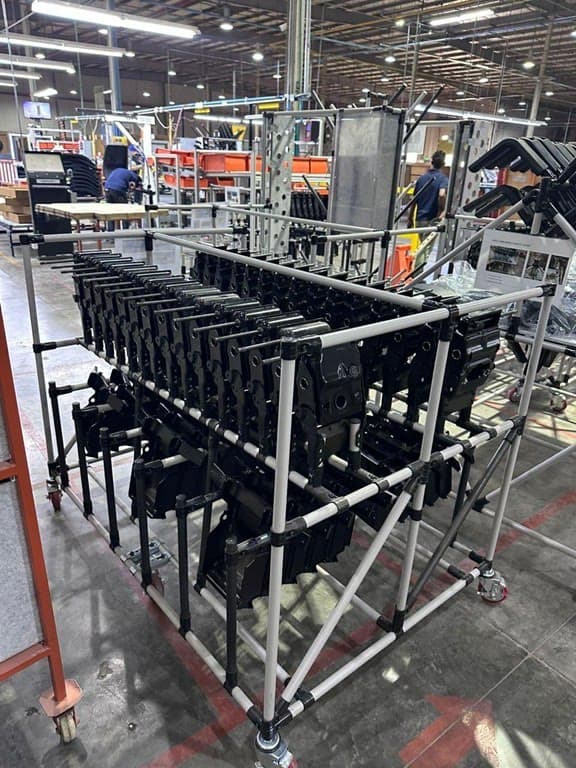
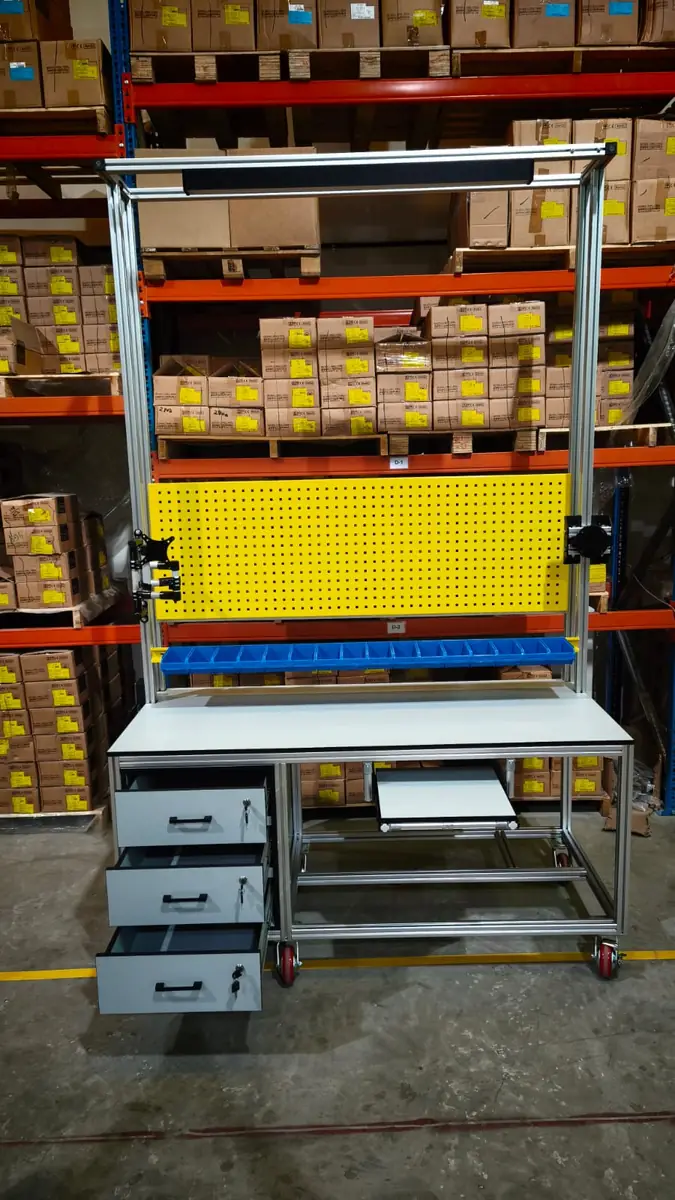
Choose D-coated steel pipe and joint systems (DP2807–DP2820) for high-load static FIFO racks, heavy workbenches, and cost-effective factory setups; choose aluminum pipe systems (AP2812 series) for lightweight mobile kitting carts, tugger train trolleys, cleanrooms, and Karakuri mechanical automation where low dead-weight and corrosion resistance are critical.
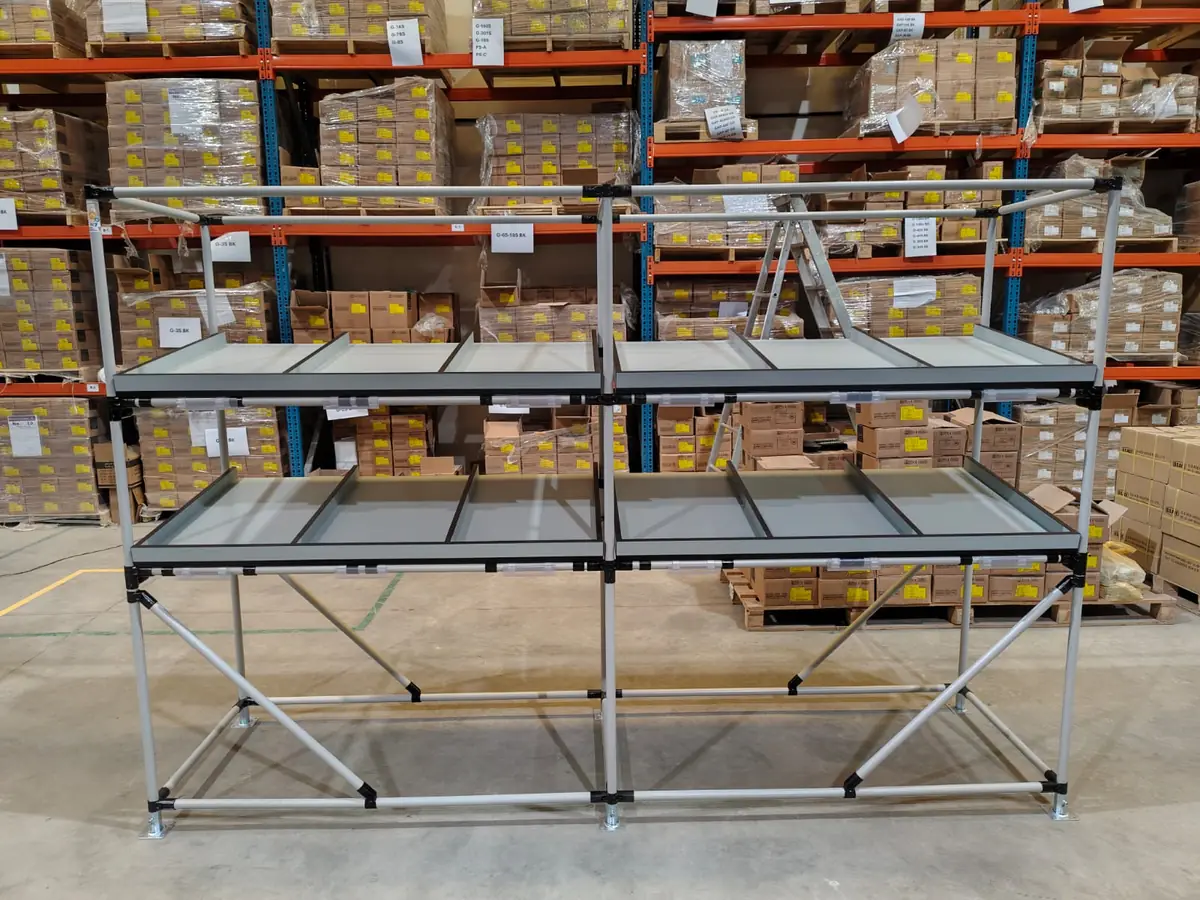
1. Structural Mechanics: D-Coated Steel vs. Ribbed Aluminum Pipes
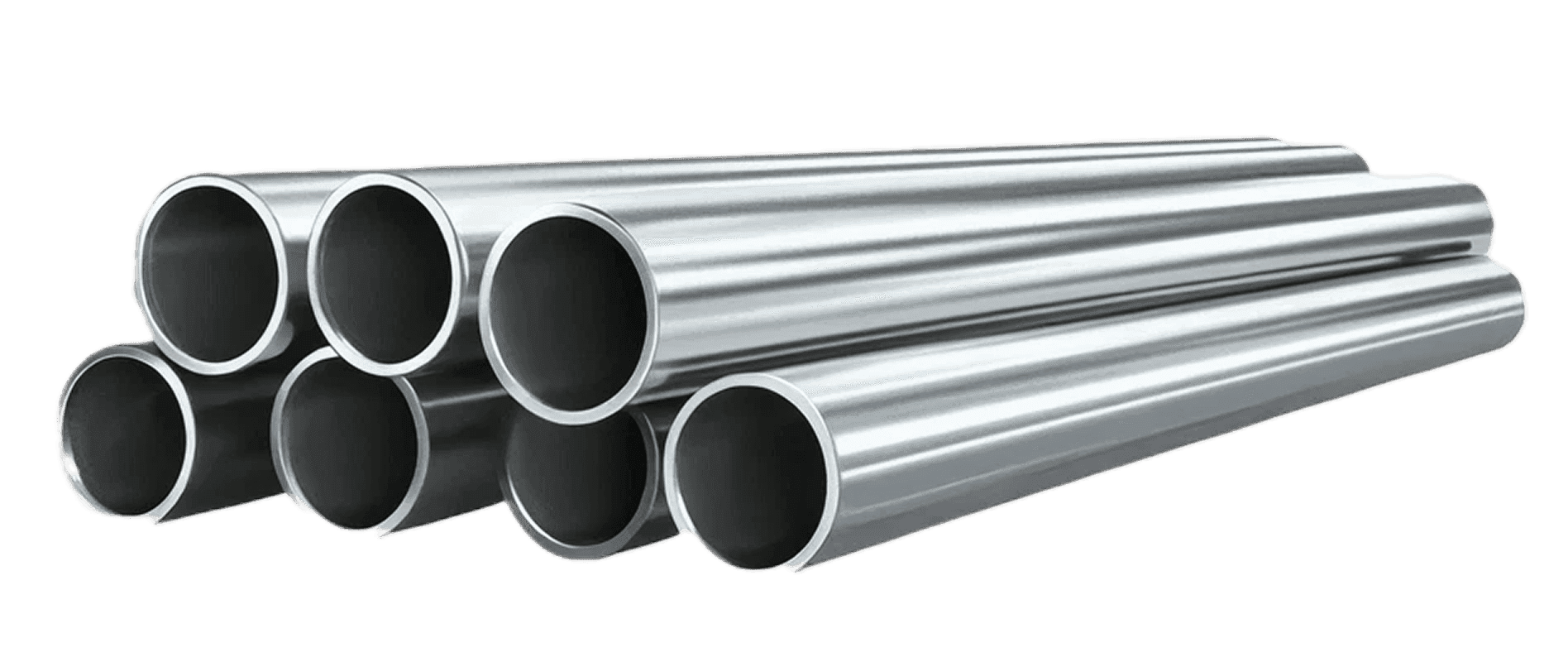
Both D-coated steel pipes (such as G-SACE DP2807, DP2809, DP2814, and DP2820) and modular aluminum pipes (AP2812 series) share the universal 28 mm outer diameter standard, meaning engineers can mix or transition between systems using standardized clamping hardware.
D-coated steel pipes use cold-rolled steel tubing bonded with an outer polyethylene/ABS resin layer and an anti-corrosion inner primer. Aluminum pipes (AP2812 series) weigh 0.297–0.741 kg per meter, work with the same metal joints and accessories, and can be used in clean rooms.
- D-Coated Steel (DP2814 1.4 mm): Highest bending stiffness per dollar for stationary FIFO flow racks and heavy assembly tables.
- Aluminum (AP2812 series): lighter than steel, no rust in humid or washdown environments, and conductive for ESD zones when an ELF plate is fitted on the joints.
- Hybrid Builds: Many MENA factories use steel pipes for stationary line-side racks and aluminum pipes for push-carts and Karakuri mechanisms.
2. Ergonomics and Push-Pull Force on Factory Trolleys
In intralogistics and kitting operations where operators push material-handling carts dozens of times per shift, dead-weight directly impacts operator fatigue and safety. Replacing steel tubing with AP2812 aluminum tubing makes carts noticeably lighter, allowing operators or autonomous mobile robots (such as Wheel.me) to move larger payloads with lower rolling resistance.
Engineering Comparison: D-Coated Steel vs. Aluminum Pipe Systems
| Parameter | D-Coated Steel (DP2807–DP2820) | Aluminum (AP2812 series) | Best Industrial Fit |
|---|---|---|---|
| Frame Weight | Heavier | Lighter | Aluminum wins for mobile trolleys & AGVs |
| Corrosion Resistance | High (anti-rust inner coat) | Very high (no rust) | Aluminum wins for cleanrooms & pharma |
| ESD Conductivity | Requires Black ESD Coating | With ELF plate on the joints | Aluminum or ESD Steel for electronics |
| Initial Material Cost | Lower cost per meter | Higher cost per meter | Steel wins for large stationary FIFO racks |
Frequently asked questions
Yes. Because both G-SACE D-coated steel pipes and AP2812 aluminum pipes share a 28mm outer diameter, they can be used together in the same shopfloor layout.
Both work well: aluminum pipes become conductive when an ELF plate is fitted on the aluminum joints, while black ESD D-coated steel pipes (EP2807-X) give a dark, low-glare conductive frame (10³–10⁶ Ω).
Related Guides & Use Cases
Explore more guides and use cases from ADAPTIV.

 Engineering Guide
Oct 30, 2026 · 7 min read
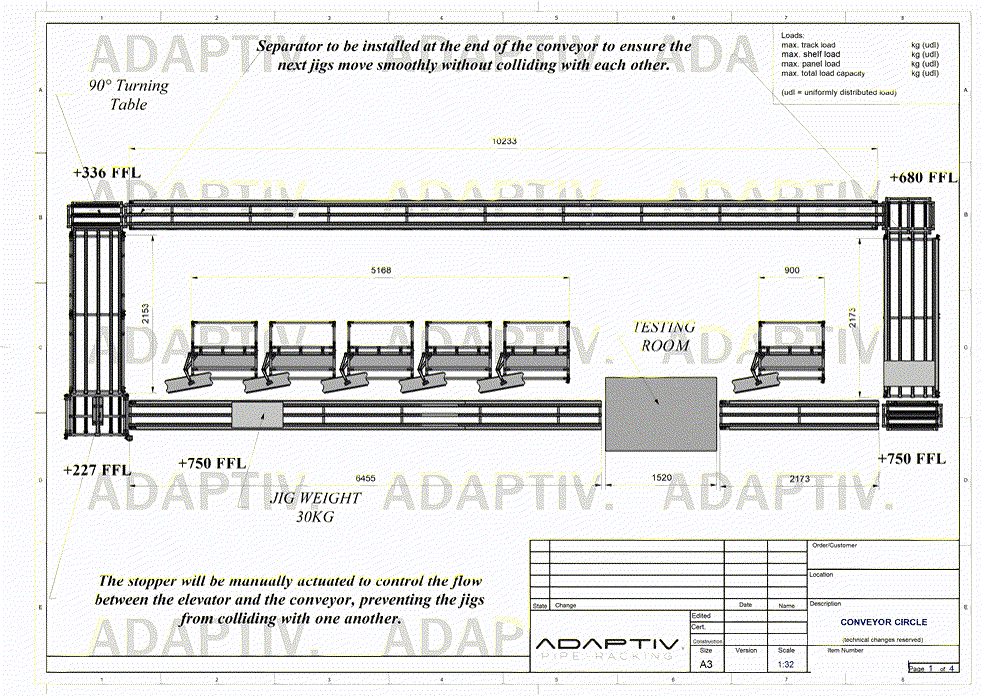
Karakuri Kaizen: Building Zero-Energy Mechanical Automation with Pipes and Joints
How automotive and industrial plants use gravity, counterweights, cams, and G-SACE pipe-and-joint mechanisms to automate tote transfers with zero electricity.
20–30 kgJigs returned on rollers, not carried by hand5Operators on the line (ADAPTIV project)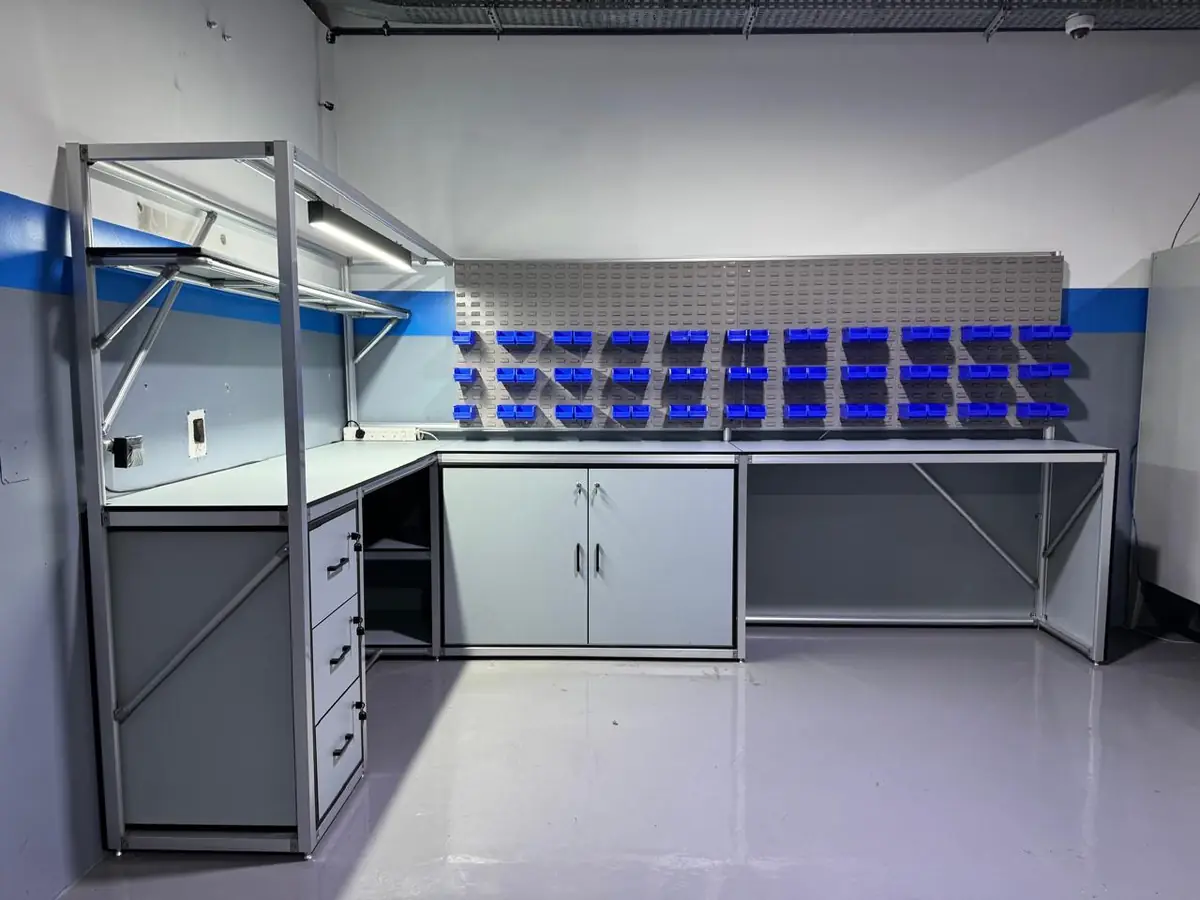 Engineering Guide
Oct 28, 2026 · 6 min read
How to Design ESD-Safe Workstations & Conductive Racks (IEC 61340-5-1 Guide)
Engineering checklist for electrostatic discharge (ESD) protected areas (EPAs) using conductive G-SACE pipes, nickel-plated joints, ESD mats, and SK-2141A ESD chairs.
10⁴–10⁹ ΩTarget Surface ResistanceIEC 61340-5-1International ESD Standard