

Karakuri Kaizen: Building Zero-Energy Mechanical Automation with Pipes and Joints
How automotive and industrial plants use gravity, counterweights, cams, and G-SACE pipe-and-joint mechanisms to automate tote transfers with zero electricity.
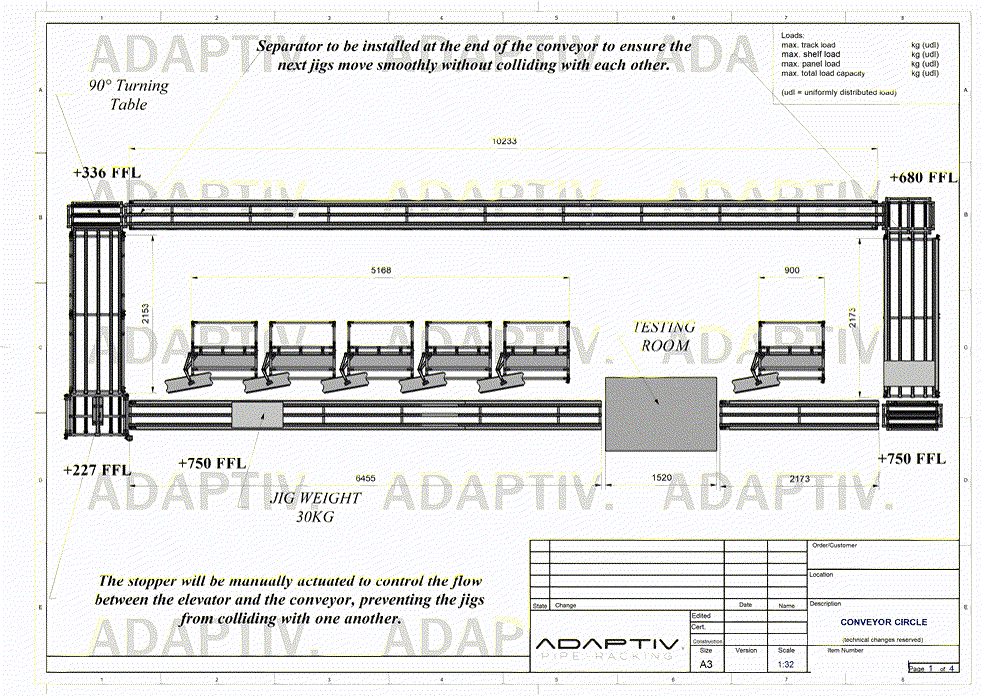
- 20–30 kg
- Jigs returned on rollers, not carried by hand
- 5
- Operators on the line (ADAPTIV project)
Executive Summary & Engineering Takeaway
Karakuri Kaizen is a lean manufacturing engineering discipline that uses gravity, levers, pulleys, counterweights, and roller tracks built from modular pipes and joints to automate material handling and box return without electric motors, PLCs, or pneumatic cylinders.
1. Why Karakuri Outperforms Complex Conveyor Automation on Assembly Lines
Traditional powered conveyors and pneumatic lifters require electrical wiring, PLC programming, safety light curtains, and spare motor inventory. When a sensor fails, the entire line stops.
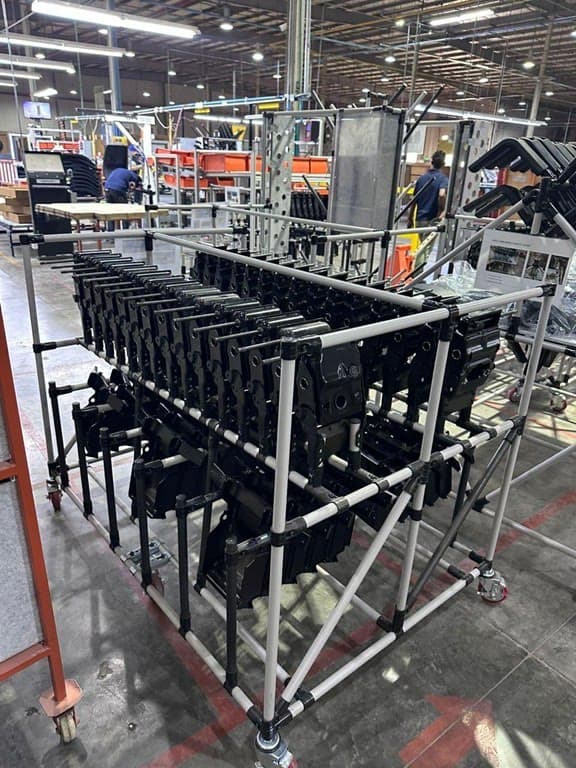
Karakuri mechanisms built by ADAPTIV using Korean G-SACE pipes, rotary joints, roller tracks, and simple counterweights use the weight of the full tote itself to raise or return empty totes automatically.
- Gravity Jig & Tote Return: Inclined lower roller lanes return empty fixtures to the start of the assembly line automatically.
- Counterweight Elevators: When a heavy parts bin is placed on a platform, it descends smoothly to ergonomic waist height; when emptied, a counterweight returns the platform to the top reload level.
- Shooter Racks for AGVs/AMRs: Mechanical latches release full totes from a tugger cart onto a line-side FIFO rack as the cart passes by.
2. Real Implementation: Assembly Line with Integrated Jig Return
In ADAPTIV's assembly line project with integrated jig return, five operators build products on fixtures (jigs) weighing 20 to 30 kg. A gravity return path brings each empty jig back to the start of the line on rollers, so it no longer has to be carried by hand, without a single motor.
Karakuri Mechanical Automation vs. Motorized Conveyors
| Factor | ADAPTIV Karakuri System | Motorized / PLC Conveyor | Shopfloor Advantage |
|---|---|---|---|
| Capital Cost (CAPEX) | Low (standard pipes, joints & rollers) | Higher (motors, drives, PLCs) | Lower upfront cost |
| Maintenance & Downtime | Visual mechanical inspection only | Requires electrical & PLC technicians | Near-zero unplanned downtime |
| Reconfiguration | Adjustable in hours with Allen key | Requires electrical rewiring & code changes | Ideal for high-mix Kaizen lines |
Frequently asked questions
Karakuri originates from traditional Japanese mechanical dolls and in modern Toyota Production System (TPS) lean manufacturing refers to no-power, low-cost automation (LCIA) devices built from modular pipes, joints, rollers, and counterweights.
Yes. ADAPTIV's engineering team designs, simulates, prototypes, and installs custom Karakuri racks, gravity jig returns, and mechanical shooter carts.
Related Guides & Use Cases
Explore more guides and use cases from ADAPTIV.

 Engineering Guide
Nov 1, 2026 · 6 min read
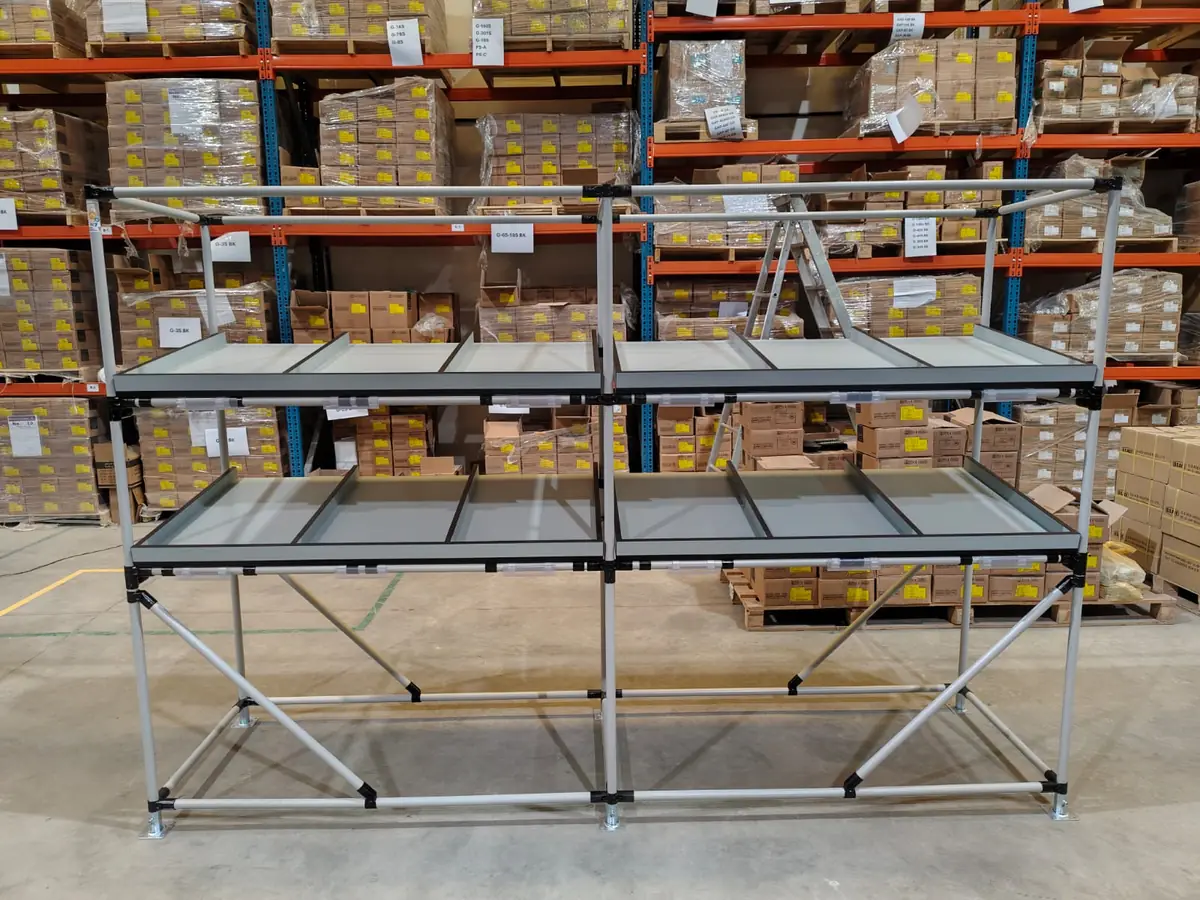
Aluminum vs. D-Coated Steel Pipe and Joint Systems: Complete Engineering Comparison
How to choose between 28mm resin-coated steel pipes (DP2807–DP2820) and aluminum modular pipes (AP2812 series) for workstations, FIFO flow racks, and mobile trolleys.
28 mmStandard Outer Diameter0.7–2.0 mmSteel Wall Thickness Options (DP2807–DP2820)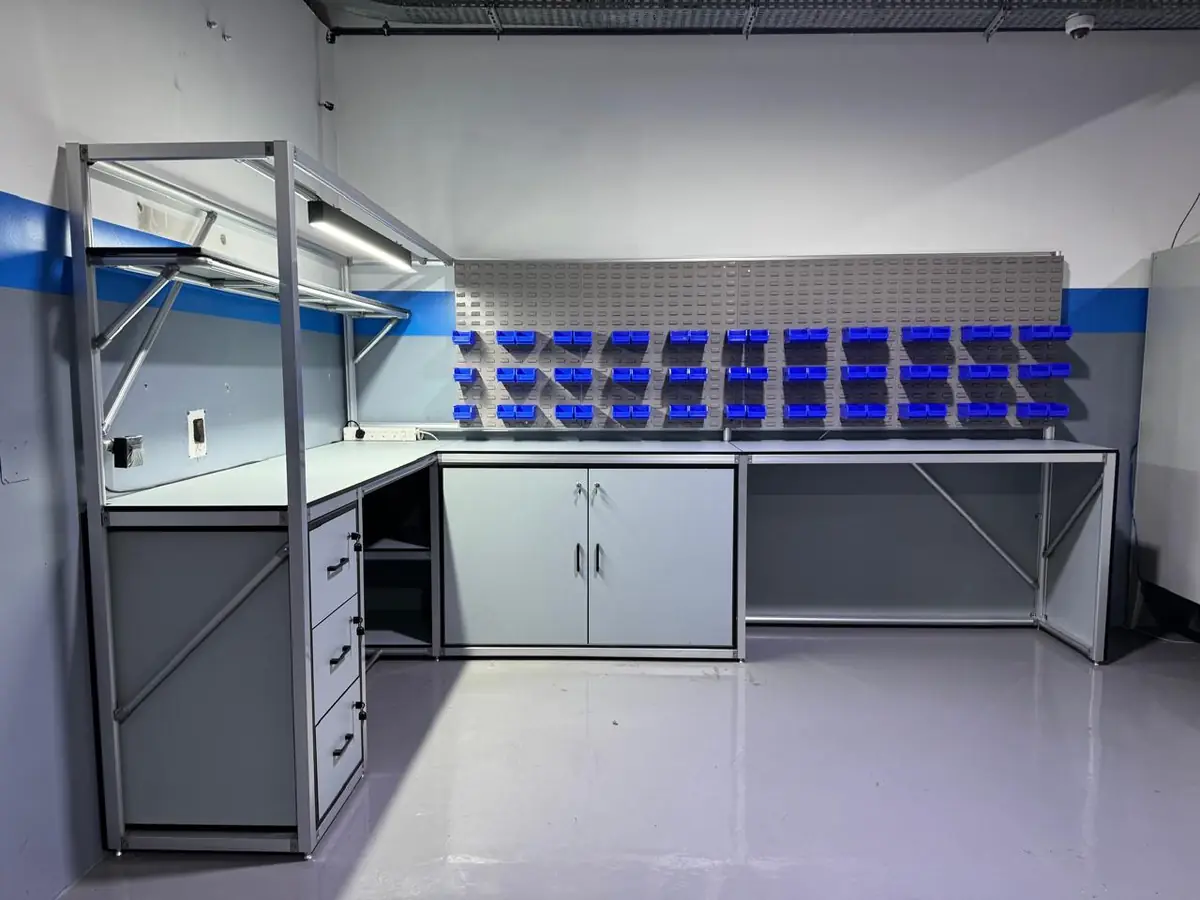 Engineering Guide
Oct 28, 2026 · 6 min read
How to Design ESD-Safe Workstations & Conductive Racks (IEC 61340-5-1 Guide)
Engineering checklist for electrostatic discharge (ESD) protected areas (EPAs) using conductive G-SACE pipes, nickel-plated joints, ESD mats, and SK-2141A ESD chairs.
10⁴–10⁹ ΩTarget Surface ResistanceIEC 61340-5-1International ESD Standard